10 Influencer Marketing Stats You Need to Know in 2026

Here are the 10 most noteworthy influencer marketing statistics from Aspire's latest industry benchmark report, The State of Influencer Marketing 2026.
What are the world’s leading brands and creators planning for 2026?
We’re excited to share key insights from our latest benchmark report, The State of Influencer Marketing 2026. This year, we analyzed first-party platform data from Aspire and survey results from nearly 900 marketers and creators to gain insights into the ever-evolving influencer marketing industry.
In this blog, we’re highlighting 10 of the most noteworthy statistics and insights that will shape how brands and creators collaborate in 2026. Keep reading and be sure to download the complete report for an in-depth look at what’s ahead in the world of influencer marketing.
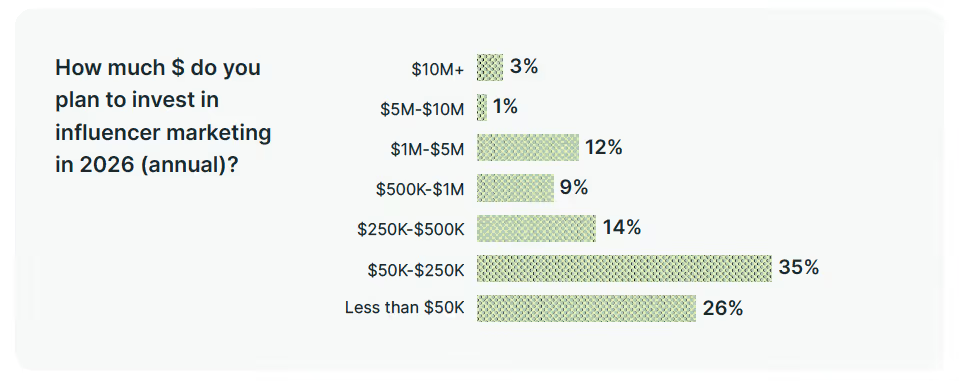
74% of marketers plan to increase their influencer marketing budgets in 2026.
Even amid tightening budgets, nearly three-quarters of marketers plan to increase their influencer marketing budgets in 2026, as creators continue to capture both attention and ad dollars. However, the exact amounts marketers are planning to invest vary significantly, reflecting the diversity in company sizes, revenue, and priorities of brands leveraging this channel.
59% of marketers use AI in their influencer marketing operations.
59% of marketers say they’re already using AI in their influencer marketing operations to make their campaigns faster, smarter, and more data-driven. They’re turning to AI-powered platforms like Aspire to identify better-fit creators through automated filtering, predict which content will perform best based on real-time campaign data, and analyze performance more efficiently.
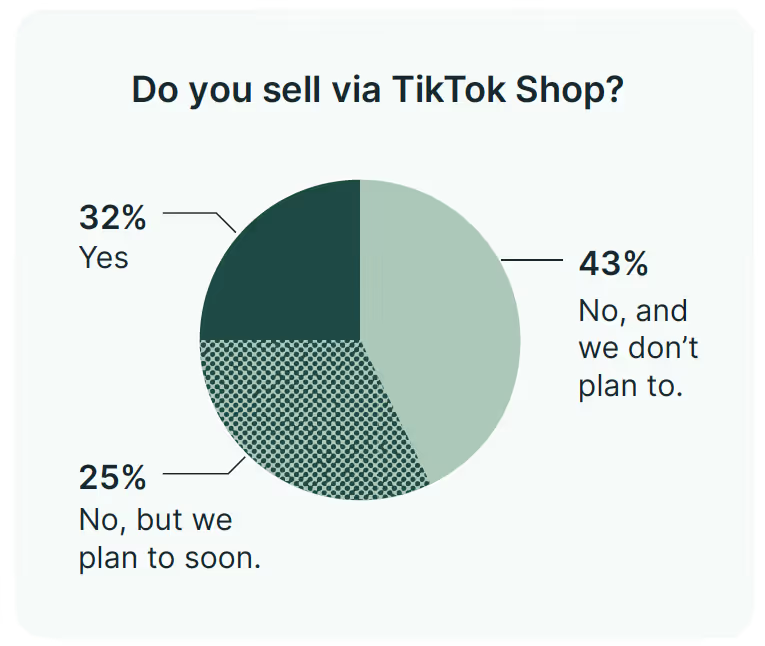
57% of brands already sell through TikTok Shop, or plan to soon.
32% of brands now sell through TikTok Shop (up from just 17% last year), with another 25% planning to start soon, as sales on TikTok Shop continue to skyrocket. In fact, over the 2025 Black Friday and Cyber Monday weekend alone, TikTok Shop sales exceeded a record $500 million.
69% of marketers say influencer-generated content performs better than brand-directed content.
Influencer-generated content (IGC) is often more relatable than brand-directed, studio-shot content, making it more engaging and trustworthy. Plus, IGC naturally delivers different voices, formats, tones, and styles that resonate with people from all walks of life, making it the perfect asset to repurpose across all of your branded channels.
77% of marketers actively repurpose creator content in paid ads.
77% of marketers repurpose creator content in paid social campaigns to fuel performance at scale and extend its impact well beyond organic reach. And this shift is only accelerating in the age of Meta’s Andromeda. As Meta moves toward AI-driven optimization that prioritizes creative volume and diversity over audience segmentation, performance now depends on feeding the algorithm a steady stream of high-quality creative.
63% of creators say they prefer long-term partnerships over any other type of campaign.
By investing in lasting relationships with creators, you can create campaigns that feel more authentic and build trust with their audience. Plus, according to our survey, brand ambassador programs delivered the highest ROI for brands compared to other kinds of campaigns — a strong testament to the power of building long-term relationships with creators.

86% of creators are still willing to work with brands for just free products, if they love the brand or the product value is high.
The majority of creators are still willing to work with brands for just free products, as long as they love the brand or the product value is high. That being said, it’s important that marketers compensate creators fairly for the time and effort they put into creating content. Avoiding influencer payment in the long run is unethical and can tarnish your brand’s reputation.

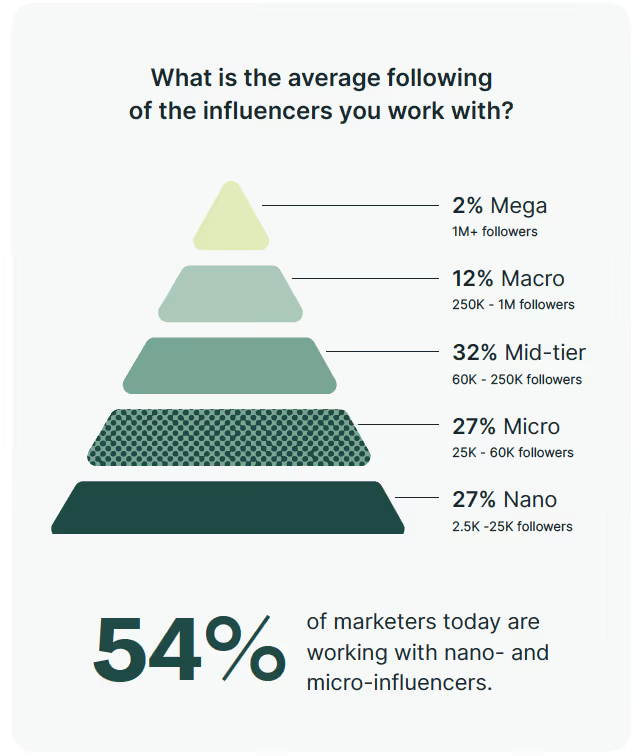
54% of marketers primarily work with nano and micro creators.
More than half of marketers say they primarily work with nano-influencers (27%) and micro-influencers (27%). But a growing 32% brands are investing in mid-tier influencers for both their strong engagement and broader reach.
Creators drove 45% more affiliate sales year-over-year.
Affiliate marketing is proving to be a top sales-driving strategy for marketers. More brands are sharing their profits with creators, giving them direct financial incentives based on content performance. And it’s paying off. In 2025, creators on Aspire drove over $52 million in attributed affiliate sales, a 45% year-over-year growth.
Influencer marketing CPM has dropped 42% year-over-year.
Across all platforms, the average influencer marketing CPM in 2025 was $2.68, reflecting a 42% year-over-year decrease. This continued decline is a crystal clear indication of influencer marketing’s growing cost efficiency.
For more stats and insights, download The State of Influencer Marketing 2026.
.png)